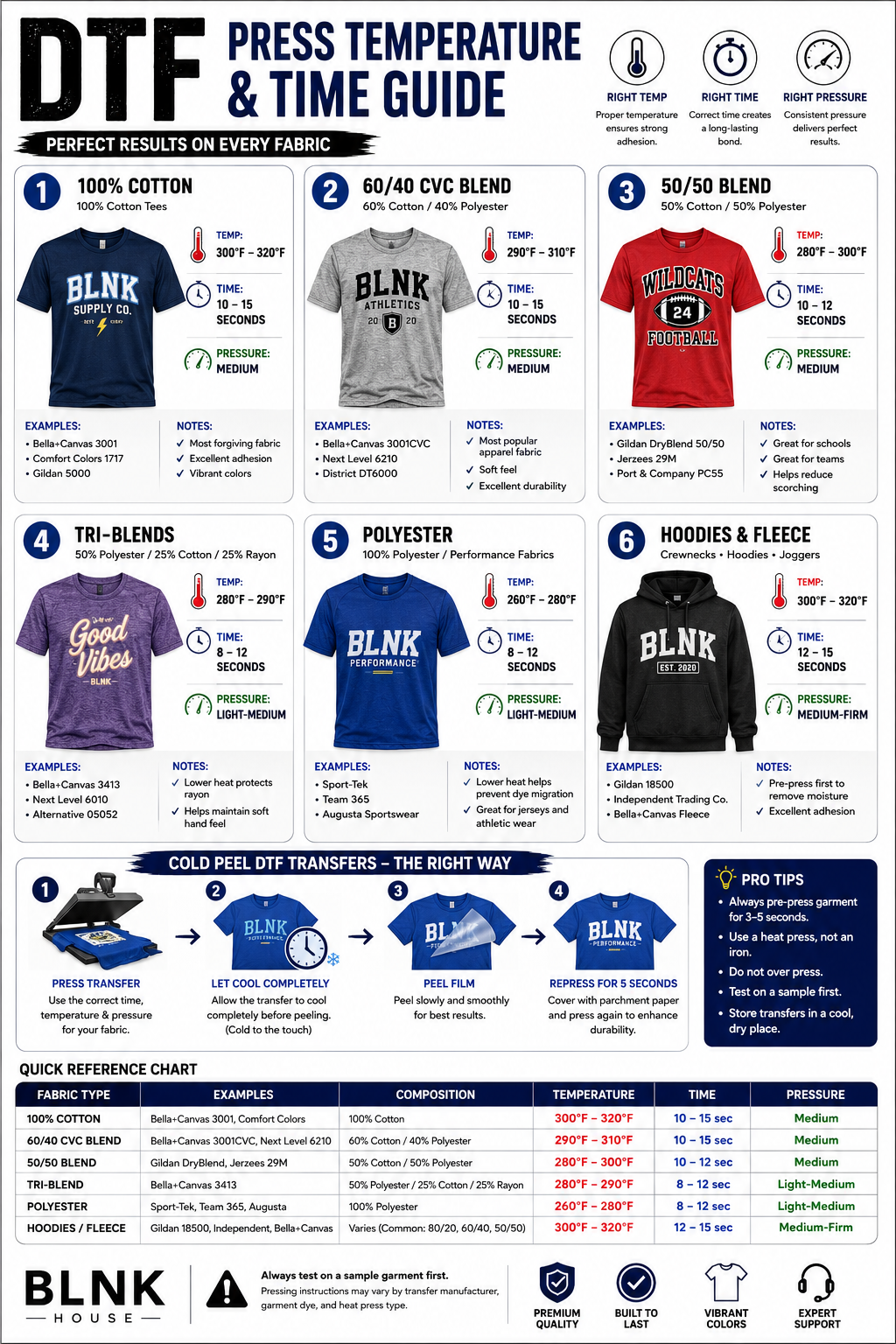
Press your transfers with the right temperature, pressure, and time for clean, durable results on cotton, polyester, blends, and performance apparel.
Use this guide as a starting point. Always test your garment before large production runs.
Use these settings as a starting point. Heat presses can vary, so adjust slightly based on your garment and equipment.
10–15 Seconds
Medium Pressure
Hot Peel
10–12 Seconds
Medium Pressure
Warm Peel
10–12 Seconds
Medium Pressure
Warm Peel
10–12 Seconds
Medium Pressure
Warm Peel
8–10 Seconds
Light-Medium Pressure
Warm Peel
Follow these steps for a smooth finish and longer-lasting print.
Pre-press the garment for 5 seconds to remove moisture and wrinkles.
Place the transfer exactly where you want the design printed.
Apply the recommended temperature, pressure, and time settings.
Peel according to the recommended method for your fabric.
Cover with parchment or butcher paper and press again for 5 seconds.
Every heat press is slightly different. Before pressing a large order, test one garment first and make small adjustments to heat, time, or pressure.
Cotton, polyester, and performance apparel each react differently to heat. Use the fabric-specific tips below before pressing.
Best for bright color, strong adhesion, and everyday apparel.
Use lower temperatures to help reduce scorching and dye migration.
Use lighter pressure and lower heat for moisture-wicking fabrics.
Order premium DTF transfers from BLNK House and bring your artwork to life with vibrant color, sharp detail, and long-lasting durability.